Custom glass perfume bottles are made through a multi-step manufacturing process. This process includes design, mold making, melting, forming, annealing, finishing, decoration, and assembly. Each stage blends art and science. Manufacturers like Lisson turn custom designs into striking, brand-elevating bottles. These perfume bottles reflect both technical precision and creative vision. Lisson, a glass perfume bottle manufacturer, guides brands from concept to finished product. This journey from design to assembly requires careful control at every step. The final products stand as luxury glass perfume bottles. Skilled workers shape molten material into precise, elegant forms with great care. Every detail matters in this craft.
Key Takeaways
-
Design starts with a CAD file. This file guides mold creation.
-
Glass forms by hand blowing or machine pressing. Each method suits different volumes.
-
Annealing cools glass slowly. This process removes stress and strengthens bottles.
-
Finishing adds color, logos, and texture. Silkscreen printing and hot stamping are common.
-
Assembly fits sprayers and caps. Quality checks ensure leak-free performance.
Design and Mold Making for Custom Glass Perfume Bottles
Creating Designs with CAD
Brands can design custom glass perfume bottles from scratch to reflect their unique identity. The process begins with a concept sketch or a detailed drawing. Designers then translate that vision into a precise CAD file. This digital model captures every curve, thickness, and dimension of the bottle. Lisson offers end-to-end design services. A basic customer drawing can become a glass sample in as little as 4 weeks. This rapid turnaround helps brands move from idea to shelf quickly.
The CAD file serves as the blueprint for perfume bottle design. It defines the neck finish, shoulder shape, and base geometry. Designers can adjust wall thickness and internal volume before any physical tooling begins. This step reduces costly errors during production. A well-prepared CAD model also ensures the final bottle matches the brand's aesthetic goals. The entire bottle design and production workflow depends on this foundation.
Building Metal Molds
Engineers convert CAD files into durable metal molds for repeated production. These custom metal molds using either blowing or pressing techniques must withstand high temperatures and mechanical stress. The choice of materials directly affects mold life and bottle quality. Alloy steel offers excellent compressive strength and cost efficiency over long runs. Cast iron variants provide tailored thermal and mechanical properties for different sections.
|
Mold Material |
Typical Lifespan Before Replacement |
|---|---|
|
Steel molds |
100,000 to 1,000,000 units with proper maintenance |
|
Aluminum molds |
Can fail after as little as 1,000 units |
|
Silicone and soft elastomer molds |
Hundreds to low thousands of units |
Steel molds dominate high-volume glass perfume bottles manufacturing. Nitride-treated alloy steel resists wear and handles over 500,000 cycles. A glass perfume bottle manufacturer like Lisson selects the right material for each project. Proper maintenance extends mold life significantly. This careful material selection keeps production efficient and consistent.
The Manufacturing Process of Glass Perfume Bottles: Melting and Forming
Batch Mixing and Melting
The manufacturing process of glass perfume bottles begins with careful preparation of raw materials. Workers mix silica sand, soda ash, and limestone in precise proportions. This blend forms the base for soda-lime glass, the most common material for perfume bottle production.
|
Component |
Percentage Range |
|---|---|
|
Silica Sand |
70-75% |
|
Soda Ash |
12-16% |
|
Lime (Calcium Oxide) |
10-15% |
These materials used in perfume bottles must meet strict purity standards. Any impurity can affect clarity, color, or strength. After mixing, the batch moves to a furnace for melting.
The furnace reaches extreme temperatures to transform solid materials into liquid glass. The melting zone operates at 1500–1550 °C. This heat completes the melting of batch materials into a fully liquid phase. It also ensures full chemical dissolution and homogeneity of the glass composition. A homogenizing zone at 1450–1500 °C promotes mechanical mixing and diffusion. This step removes bubbles and inhomogeneities. The molten glass then rests long enough for remaining bubbles to escape. This creates a uniform, workable material for glass forming.
Hand Blowing vs. Machine Pressing
The manufacturing process of perfume bottles splits into two main forming methods after melting. The choice depends on order volume, design complexity, and budget.
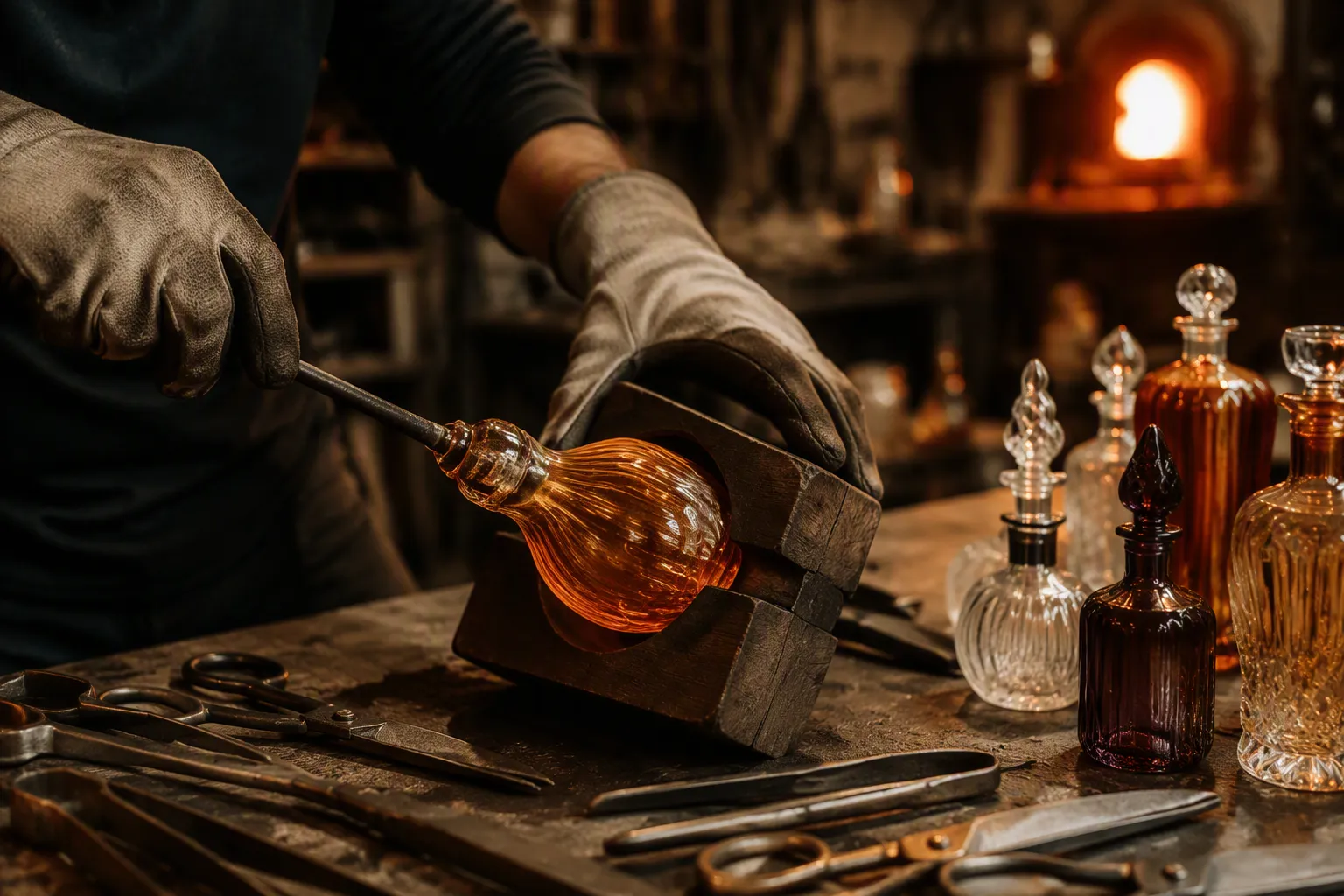
Hand blowing suits small batches and intricate designs. A skilled artisan gathers molten glass on the end of a blowpipe. They blow air into the gather and shape it with hand tools. This method allows fine control over wall thickness and unique shapes. Luxury glass perfume bottles often use hand blowing for limited editions.
Machine pressing dominates high-volume perfume bottle manufacturing. For orders over 20,000 units, automated lines cut molten glass into gobs. Compressed air then forms these gobs in high-speed molds. Two key techniques exist: press-and-blow and blow-and-blow. Press-and-blow uses a plunger to shape the interior first. Blow-and-blow forms the neck and body in separate stages. Both methods deliver consistent results at high speed.
The production process for customized glass perfume bottles often combines both approaches. A glass perfume bottle manufacturer may hand-finish machine-formed bottles to add distinctive touches. This hybrid method balances efficiency with craftsmanship.
The materials used to create perfume bottles must flow evenly during forming. Temperature control remains critical throughout. If the glass cools too much, it becomes too stiff to shape. If it stays too hot, it may deform or stick to molds. Operators monitor the gob temperature and mold conditions constantly. This attention ensures every bottle meets design specifications.
The manufacturing process of glass perfume bottles at this stage determines the final shape and structural integrity. A reliable glass perfume bottle manufacturer like Lisson manages these variables with precision. This expertise helps brands achieve consistent, high-quality results across every production run.
Annealing and Finishing in Perfume Bottle Manufacturing
Controlled Cooling for Strength
Formed bottles move directly onto a conveyor belt for controlled cooling. This step, called annealing, strengthens the glass and removes internal stress. The perfume bottle manufacturing process relies on this stage to prevent shattering. According to a glassware manufacturing guide, annealing for soda-lime glass containers occurs at approximately 550–600 °C. A packaging industry source confirms that glass bottles anneal at roughly 500 °C to 600 °C, distinct from the melting stage near 1500 °C. The process takes place in a mesh belt continuous annealing furnace with forced air circulation. This design ensures uniform temperature distribution across every bottle.
The relationship between temperature and time matters greatly. Near the annealing point, stresses relax within several minutes. Near the strain point, stresses relax within several hours.
|
Condition |
Stress relaxation time |
|---|---|
|
At the annealing point |
Stresses relax within several minutes |
|
At the strain point |
Stresses relax within several hours |
Higher annealing temperatures and longer holding times generally produce better results. Thicker glass and more complex shapes concentrate stress. Manufacturers increase temperature and extend time to eliminate that stress. Insufficient annealing time is a common cause of unqualified product stress. This links adequate annealing directly to improved stress removal.
Annealing improves mechanical strength, with up to a 40% increase.
This gain makes annealed glass far more durable for shipping and daily use.
Polishing, Coloring, and Decoration
After annealing, bottles undergo finishing to achieve their final appearance. Polishing removes surface imperfections and creates a smooth, clear finish. Fire polishing uses a controlled flame to melt the surface layer briefly. This technique produces a glossy sheen without altering the bottle shape.
Coloring offers another layer of customization. Manufacturers add metal oxides to the batch during melting. Iron oxide creates green or brown tones. Cobalt oxide produces deep blue. These materials integrate into the glass itself, so the color never fades.
Decoration transforms plain glass into branded packaging. Silkscreen printing applies logos and text with ceramic inks. Hot stamping presses metallic foil onto the surface for a premium look. Engraving cuts designs directly into the glass for a tactile effect. Frosting and spray coating add matte or gradient finishes. Each technique suits different design goals and production volumes.
These finishing steps make custom glass perfume bottles as striking as the scents they hold. A luxury glass perfume bottle often features multiple decoration methods combined. The manufacturing process of glass perfume bottles ends here for the glass itself. Yet the perfume bottle manufacturing process continues with assembly. Customized glass perfume bottles reflect brand identity through every detail. A skilled glass perfume bottle manufacturer balances aesthetics with durability. The finishing stage determines how the final product performs on a shelf. Proper annealing and decoration extend product life and enhance visual appeal. This stage completes the transformation from raw glass to finished bottle.
How Are Perfume Bottles Made? Assembly and Customization
Fitting Sprayers, Caps, and Quality Control
Assembly turns a finished glass shell into a working dispenser. Workers fit sprayers, caps, and collars onto each bottle. The pump type must match the neck finish. A 15mm screw fits screw, crimpless, and sleeve pumps. The FEA 15 crimp sprayer needs a 15mm crimp neck. Pump bodies use PP, ABS, aluminum, and stainless-steel springs. Finishes range from natural matte to metallized and anodized.
|
Pump Type |
Standard Neck Fit |
|---|---|
|
Screw pump |
15mm screw |
|
Crimpless pump |
15mm screw |
|
FEA 15 crimp sprayer |
FEA 15mm crimp |
|
Sleeve pump |
15mm screw |
Quality control follows assembly. Teams test every batch for leaks, spray performance, and safety. A traditional atomizer uses a crimped metal collar pressed against the bottle. This seal prevents leakage and extends product life. Airless pumps rely on vacuum pressure instead of a dip tube. They block air ingress that speeds oxidation. Mini screw sprayers and travel atomizers suit purses and travel kits.
Customization Options and Safety Standards
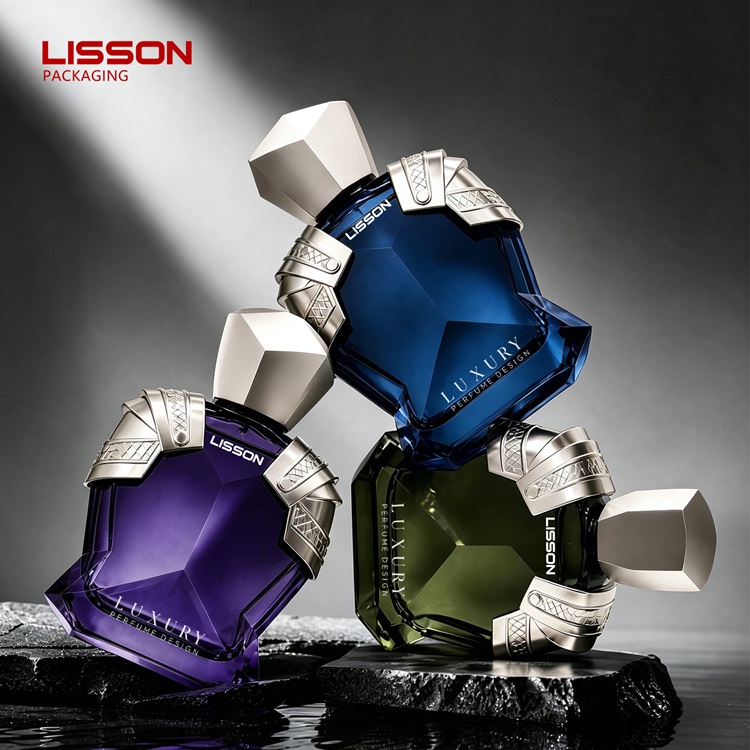
Brands choose shapes, colors, and decorations to set their scent apart. Customization covers bottle geometry, glass tint, and surface treatment. Silkscreen printing, hot stamping, and engraving add logos and patterns. Pump branding offers laser engraving, screen printing, hot foil stamping, and embossed metal plaques. These options help a glass perfume bottle manufacturer deliver high-quality, customizable perfume bottles.
Safety and compliance matter at every stage. Manufacturers follow ISO and REACH regulations. These standards limit hazardous substances and ensure product safety. Compliance protects brands and consumers alike.
Lisson provides end-to-end services. The company handles bottling, packaging, and shipping to the customer's doorstep. This full-service approach simplifies perfume bottle production for brands of all sizes. From design to delivery, every step stays under one roof.
The manufacturing process of glass perfume bottles blends art and science at every stage. Designers craft digital models, engineers build durable molds, and skilled workers shape molten glass into elegant forms. Annealing strengthens each bottle, while decoration adds beauty and brand identity. Assembly completes the transformation into a working dispenser.
Choosing a reliable glass perfume bottle manufacturer matters greatly. Lisson ensures quality, safety, and full customization for every project. The company follows ISO and REACH standards and manages bottling, packaging, and shipping. Brands seeking luxury glass perfume bottles or customized glass perfume bottles can trust Lisson's end-to-end services. Contact Lisson today to start a custom glass perfume bottle project. The right manufacturing partner turns a concept into a market-ready product.
FAQ
How long does a glass perfume bottle manufacturer take to produce a custom design?
Lisson can turn a basic drawing into a glass sample in as little as 4 weeks. This rapid turnaround helps brands move from concept to shelf quickly.
What distinguishes luxury glass perfume bottles from standard designs?
Luxury glass perfume bottles often use hand blowing for small batches. They incorporate intricate shapes and multiple decoration techniques like hot stamping and engraving.
Can brands customize the pump and cap for customized glass perfume bottles?
Yes. Pump types match specific neck finishes, such as 15mm screw or crimp. Caps come in various materials. Brands can add laser engraving or hot foil stamping to the pump itself.
What safety standards do glass perfume bottle manufacturers follow?
Manufacturers follow ISO and REACH regulations. These standards limit hazardous substances and ensure product safety. Quality control includes leak tests and spray performance checks.